
Stringers and a Change in Pace
by on in CG580
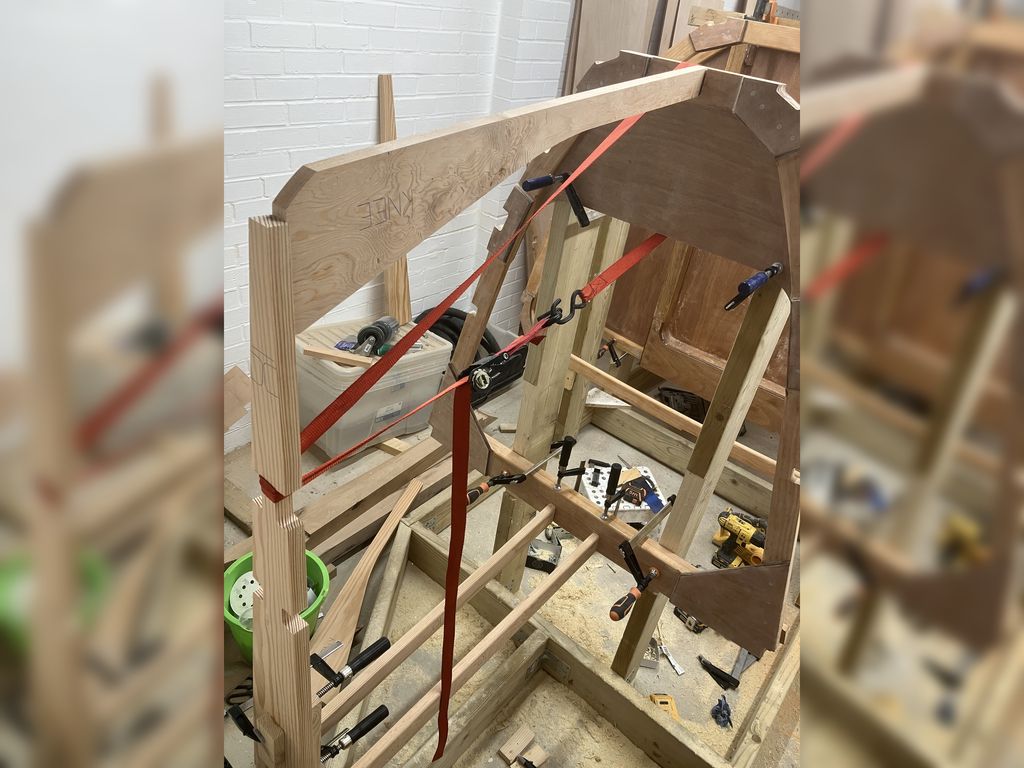
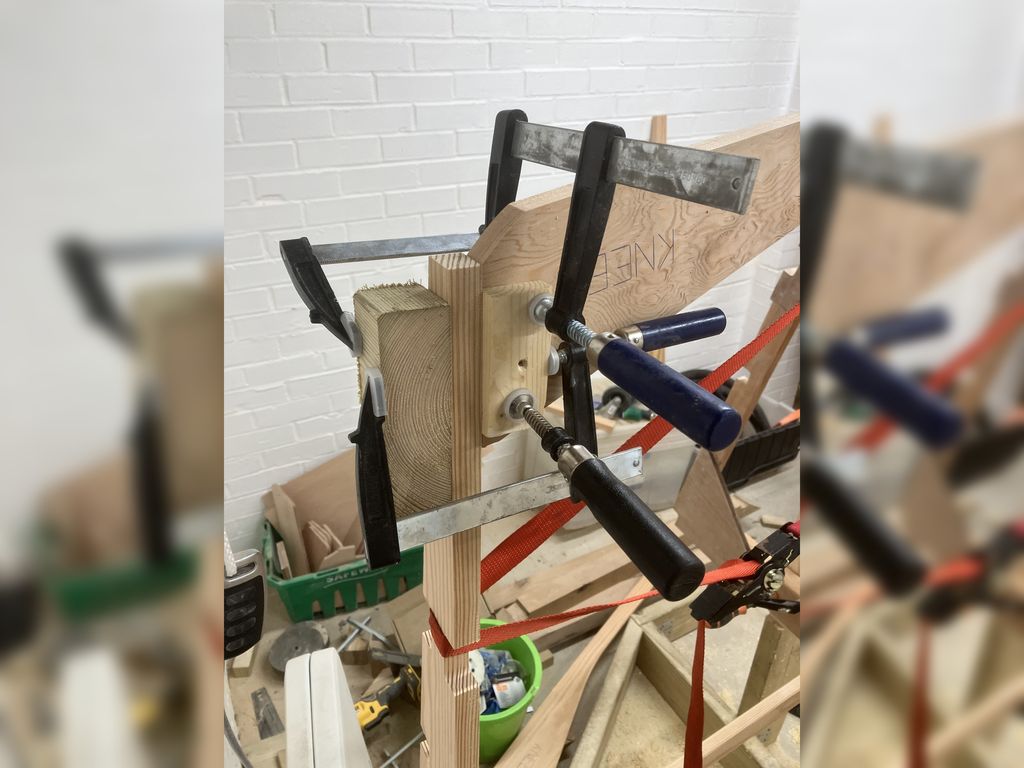
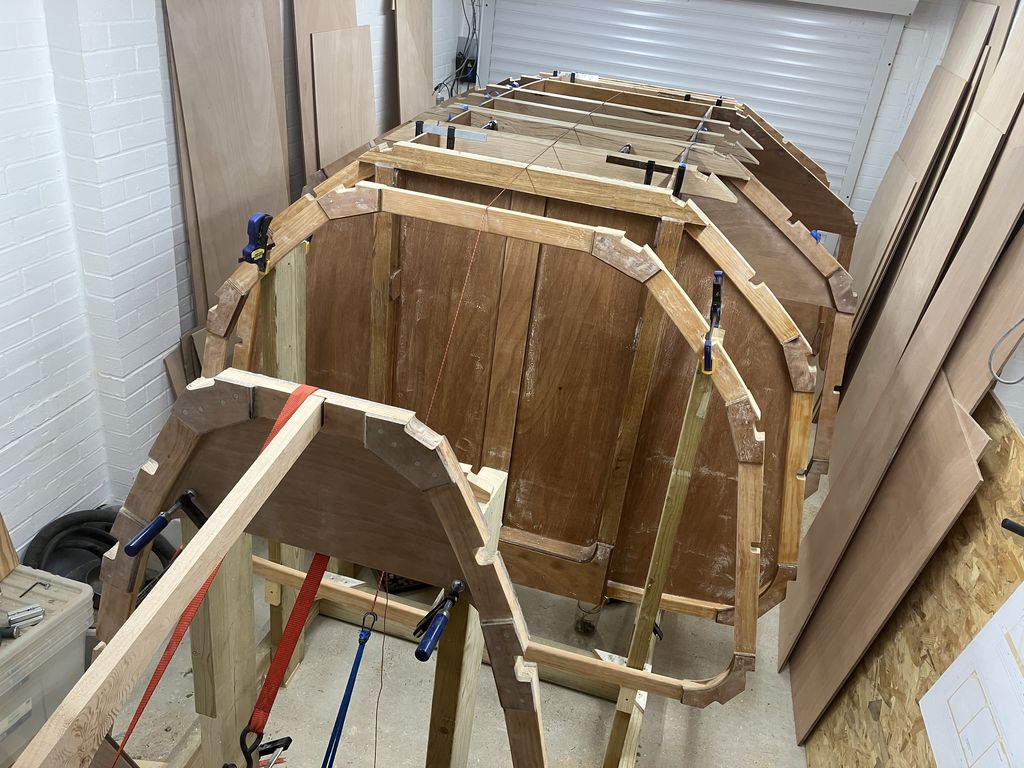
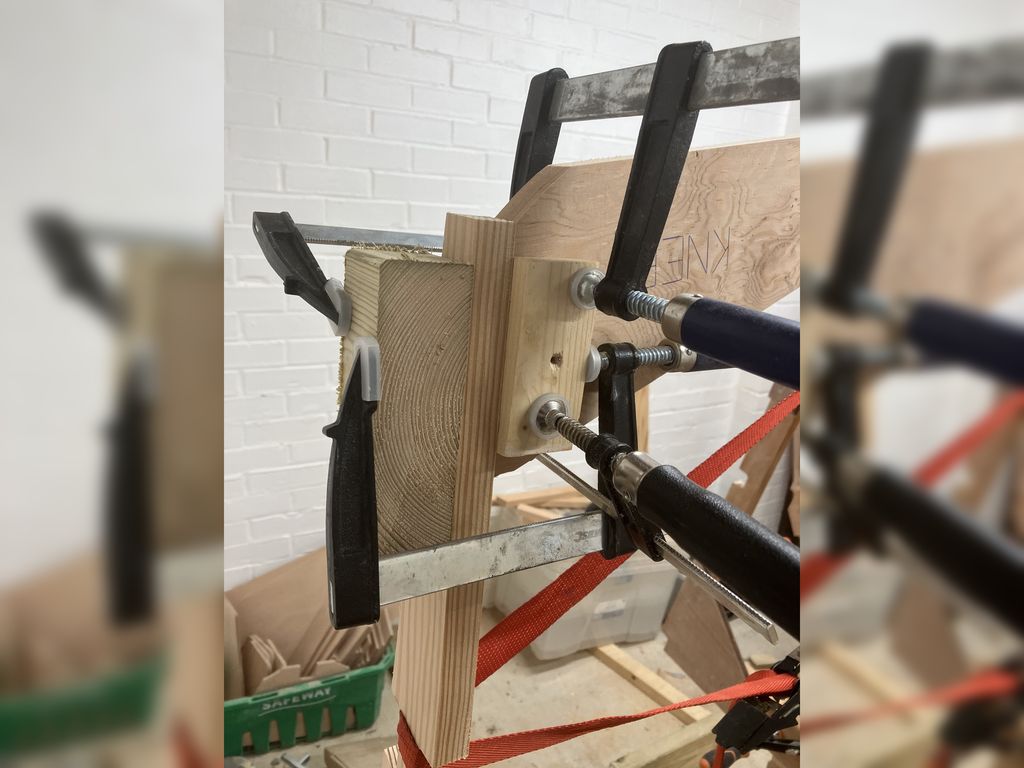
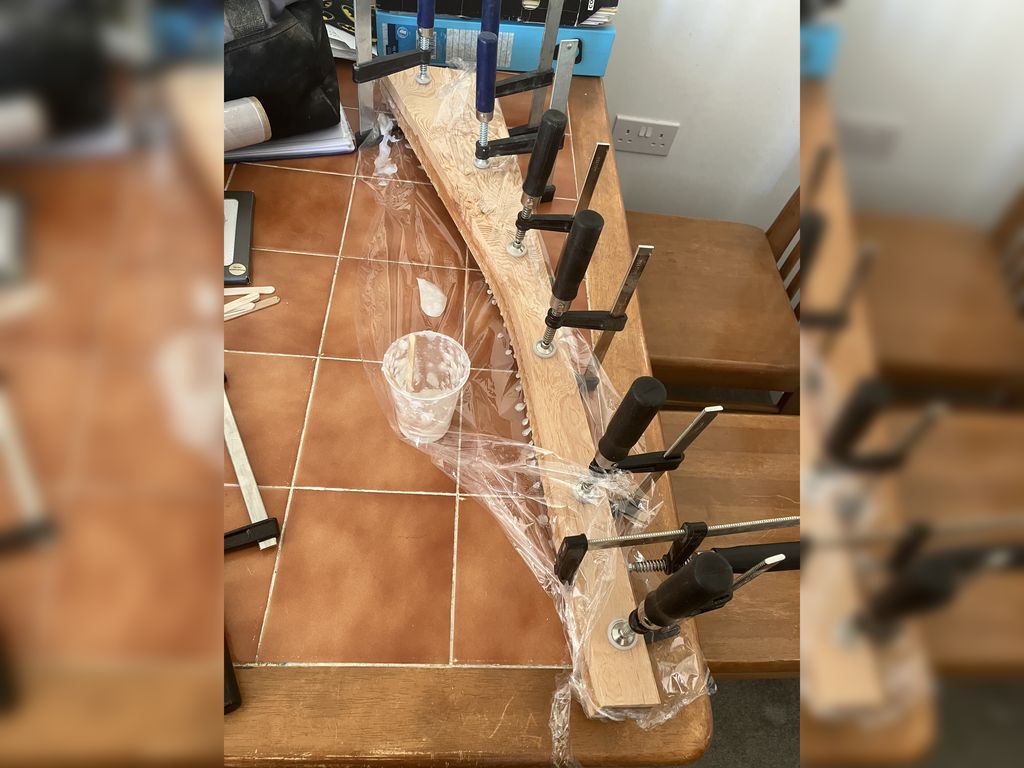
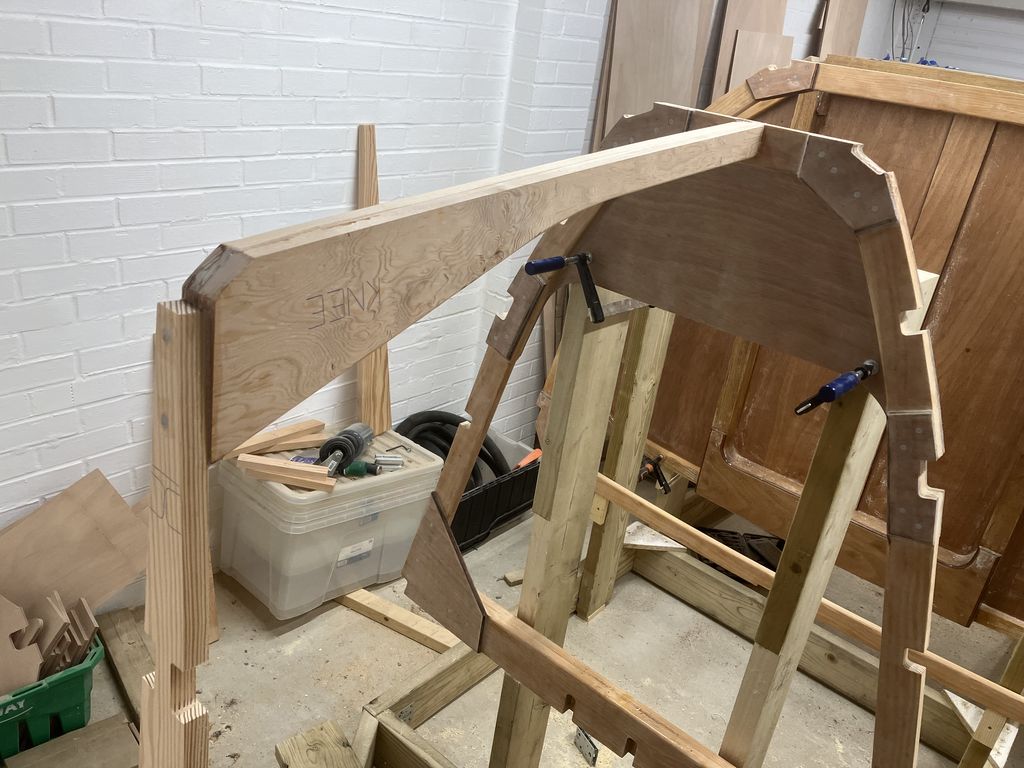
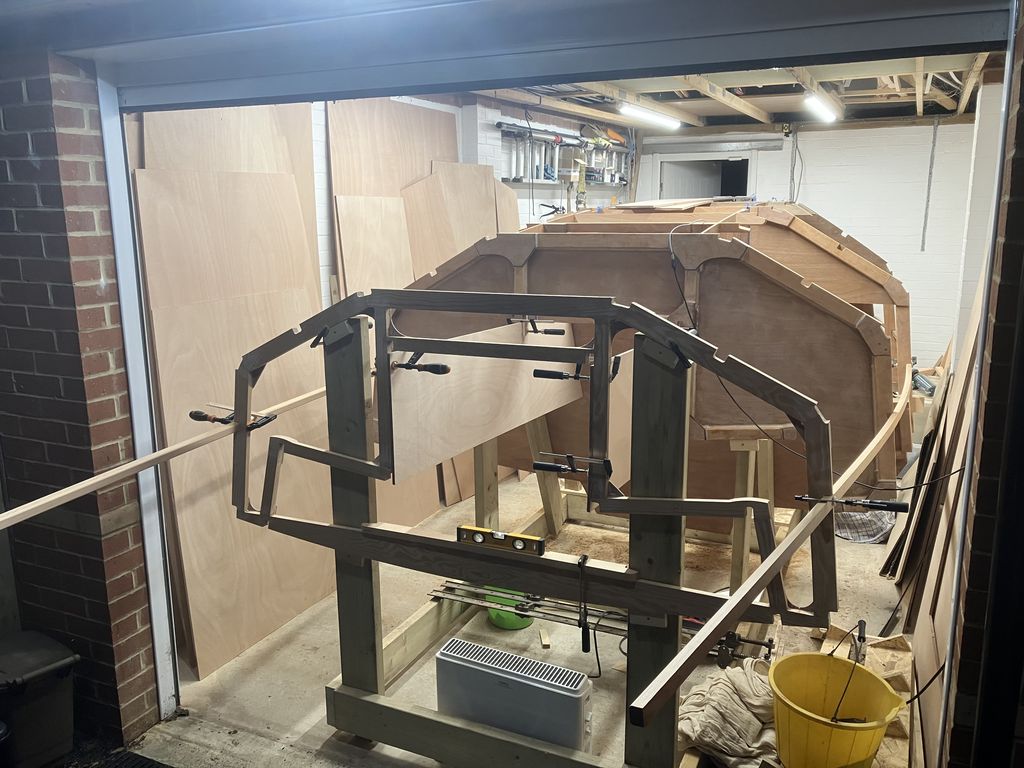
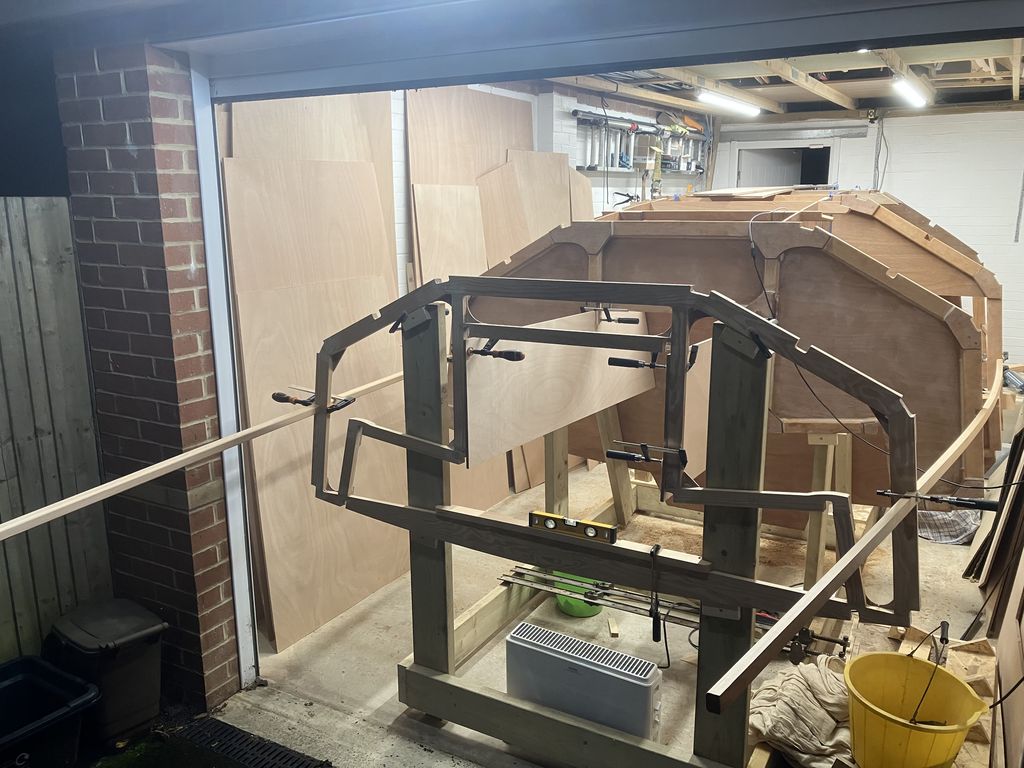
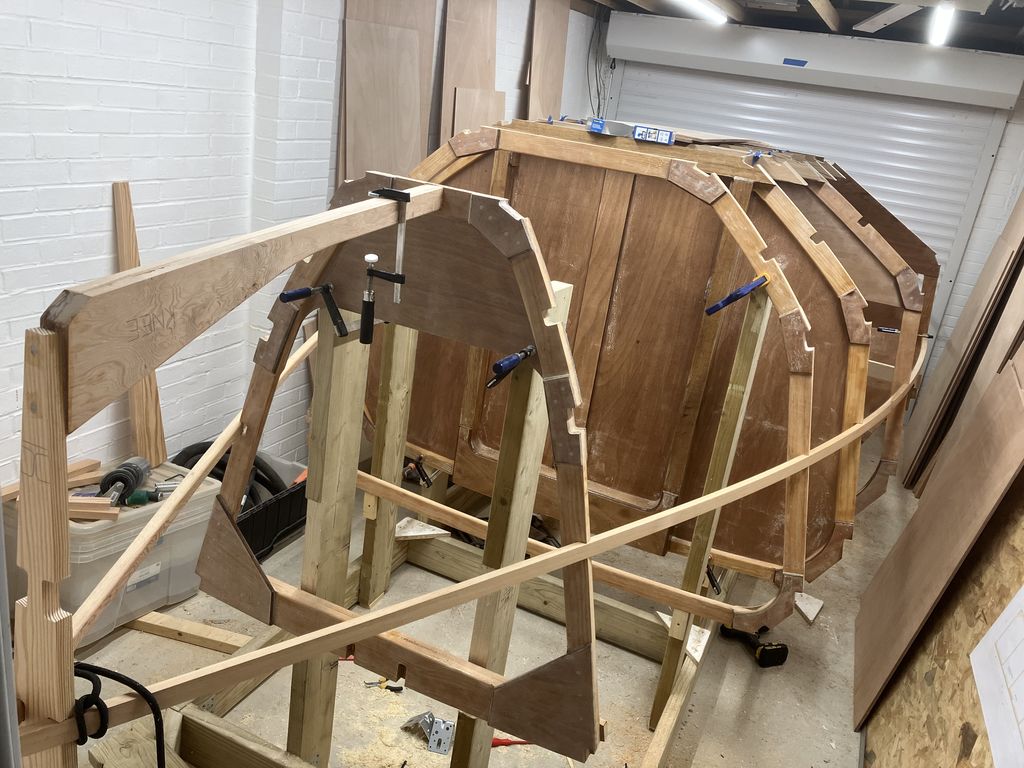
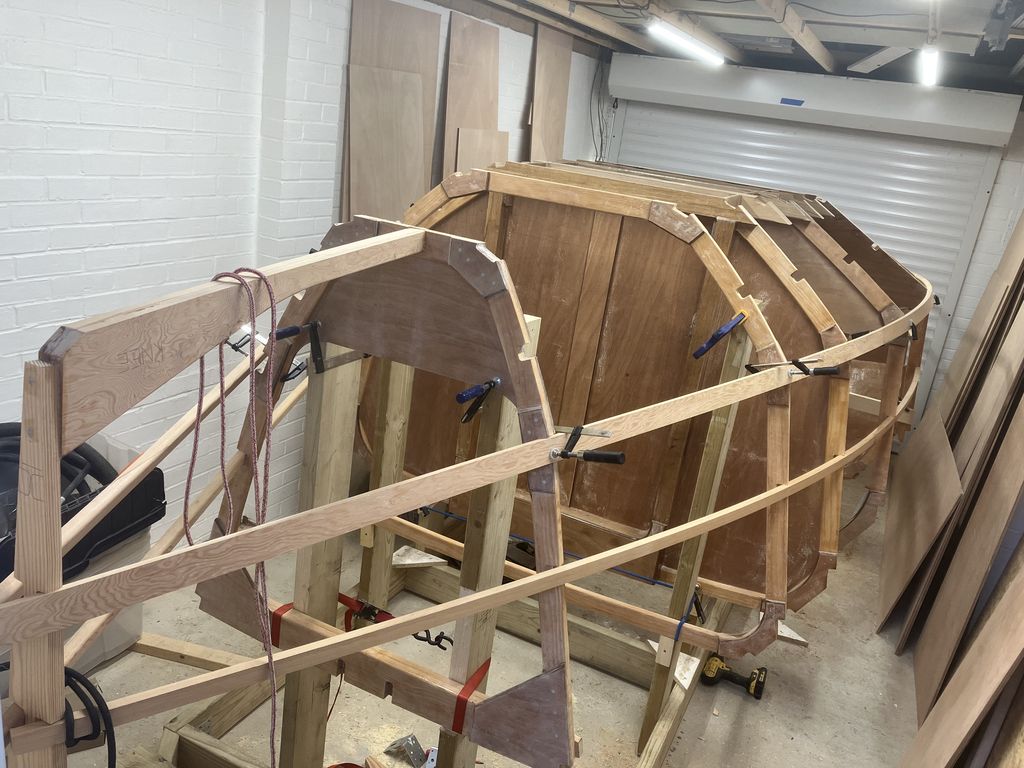
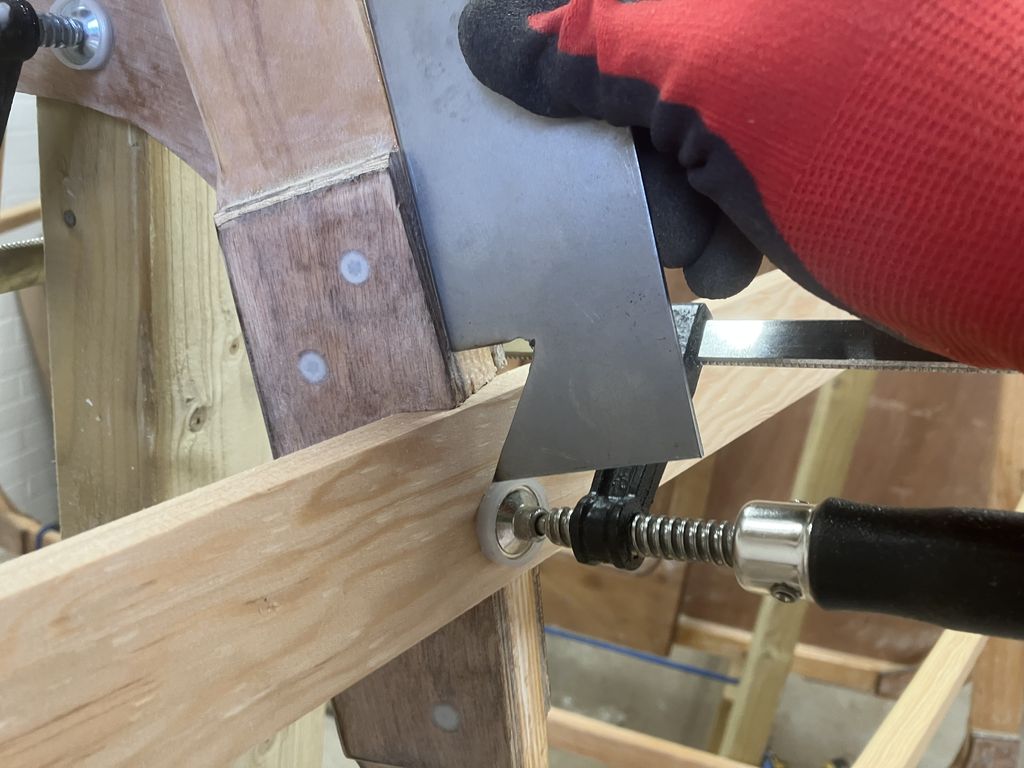
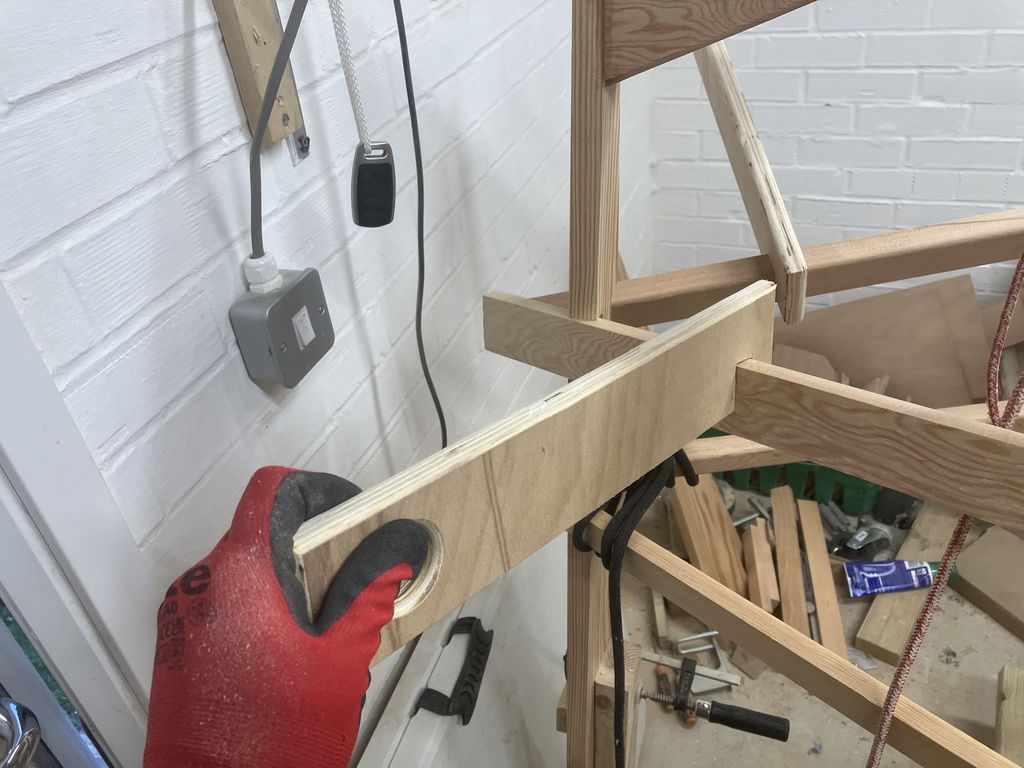
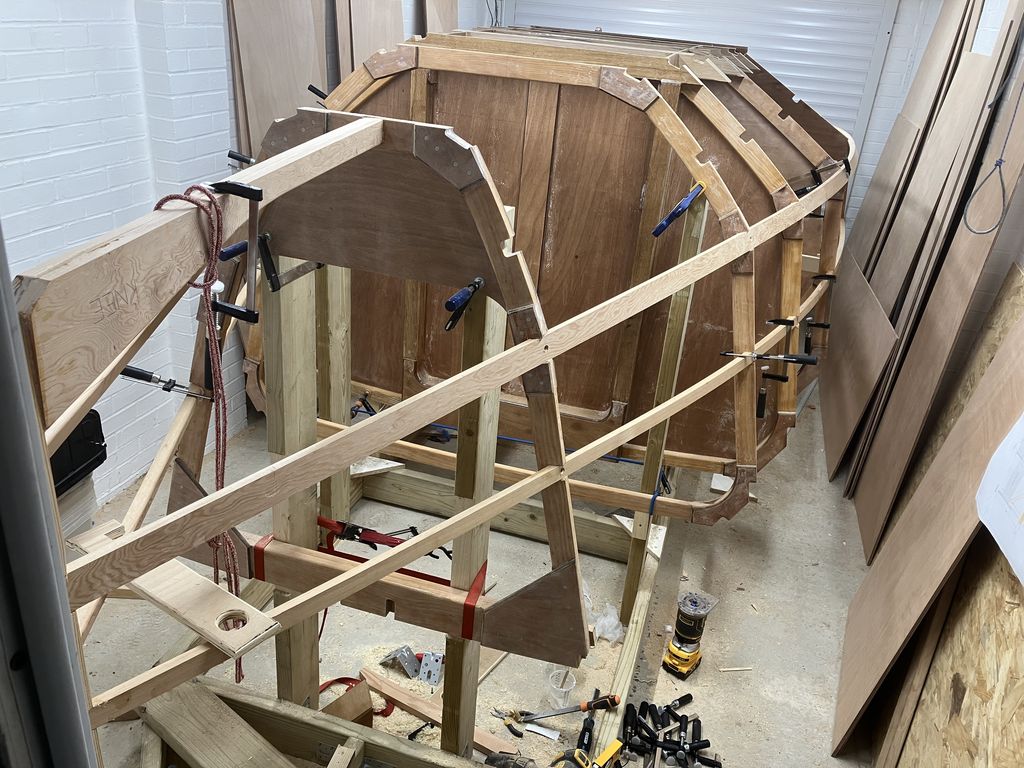
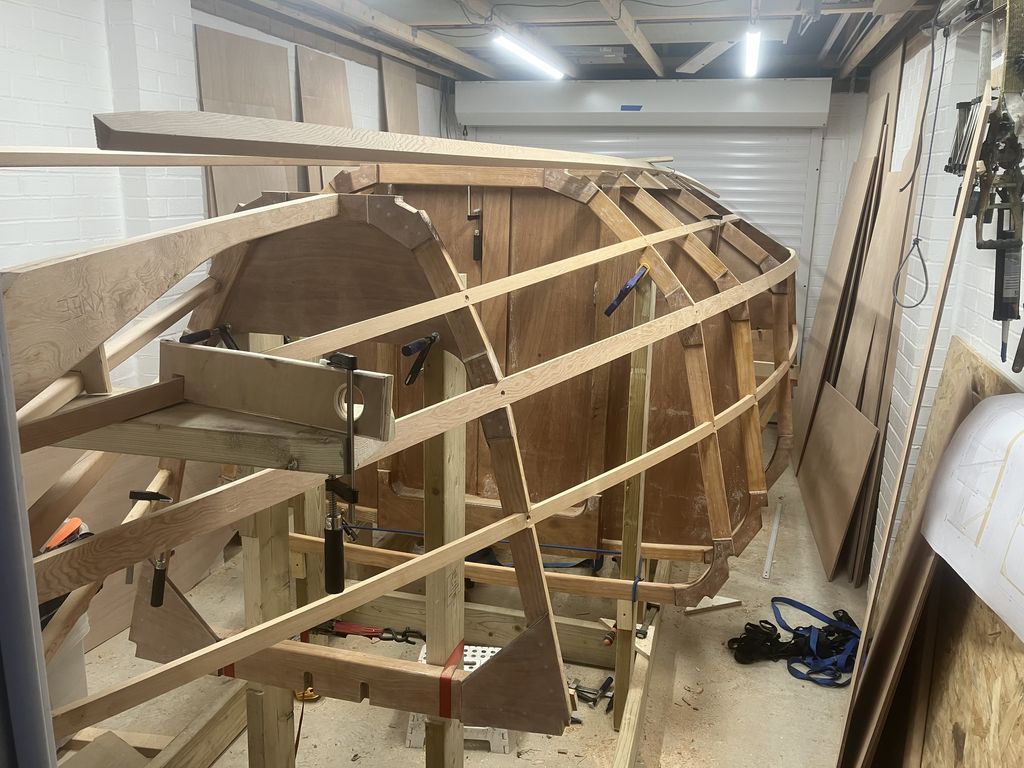
Once the frames were all aligned and the stem/knee parts added, I started attaching the stringers. I started with the thinner, lower mid-chine stringer (lower at the moment - given that the boat is upside down). This seemed like the easiest starting point because being thinner it was more flexible, therefore less likely to move the frames out of place, and it also only bends in one direction. Towards the keel of the boat the stringers not only bend but also twist towards the bow. I constructed a few handy tools to help with mounting the stringers. The first was a metal plate used to ensure that the centre of the chine stringers were recessed into the frames enough that there would still be sufficient material left once the corners of the stringer have been planed down to accept the hull sheeting and the other was a tool recommended in the Trekka blog to help with manipulating and twisting the stringers. This is just a piece of 10mm ply with a slot cut out to accept the stringer. I also used a pair of these, clamped to a piece of 2"x6" to hold the twist of two of the stringers while the thickened epoxy sticking them to the stem cured. The larger two-rail stringers will be the last to be attached because adding these limits my ability to get into the inside of the hull, which I need to be able to do due to my lack of space.
Winter has arrived in the UK and we've just gone from temperatures of 13-14° overnight down to temperatures close to zero. I'm using West Systems Epoxy with the slow hardener, which has a minimum curing temperature of 16° (and recommended minimum temperature of 21°). I've been running an electric heater in the garage to keep the temperature up, which is ok if it only has to raise the temperature a few degrees but bringing it up from 0° to 16° will be far too expensive, so the last stringers and the hull plating will now either have to wait until the spring, or might get attached with fast hardener, which cures down to 4° but is harder to work with because of the speed that it cures.
There are jobs I can be getting on with that are either not temperature-sensitive or that I can do inside my house - the skeg, rudder, sorting out a better keel-bulb mould and so on, but things will slow down now for a few months.